
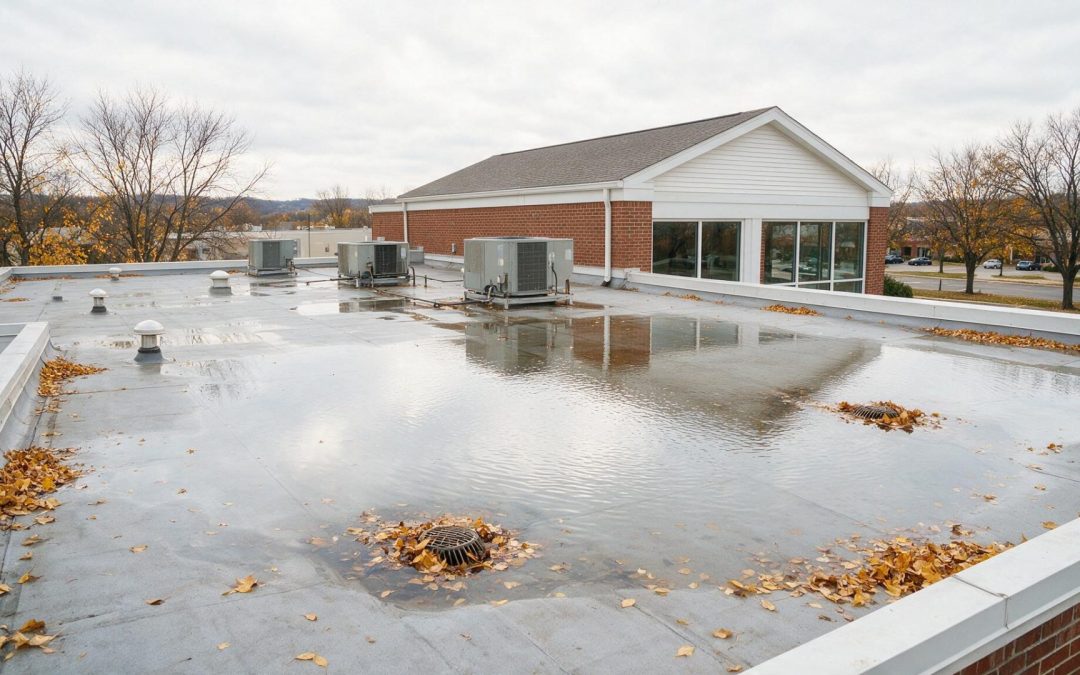
A lot of Shawnee, Kansas building owners have asked us if standing water on a flat commercial roof is normal. The answer is that a small amount of water during rain is normal. Water that remains in low areas long after the storm has passed may point to a drainage or roofing problem.
Flat commercial roofs are not completely flat. They are built with a slight slope that moves water toward drains, scuppers or gutters. A scupper is an opening through the edge of a roof that lets water drain away.
If the water cannot reach those outlets, it begins collecting in low areas. Roofers commonly call this ponding water.
One small puddle does not always mean the roof must be replaced. The location, depth, cause and condition of the roofing material all matter.
Why Does Water Collect on Flat Roofs?
Ponding water can have several causes. Sometimes the problem is a simple blockage. Other times, the roof structure or insulation has created a low spot.
Clogged Roof Drains
Leaves, branches, roofing material and other debris can block a drain. Water will collect around the opening because it has nowhere to go.

Drains should be checked regularly, especially when trees are close to the building. Wind can also carry trash and loose materials onto a commercial roof.
A blocked drain may cause:
- Water collecting around one outlet
- Debris forming a ring near the drain
- Slow drainage during rain
- Overflow from another part of the roof
- Water entering around the drain connection
Clearing debris may restore drainage, but the drain and surrounding membrane should still be inspected for damage.
Blocked Scuppers or Gutters
Some commercial buildings move water through scuppers and exterior downspouts instead of internal drains.
Leaves, ice and debris can block these openings. Gutters may also sag or pull away from the building.
Water may then collect near the roof edge or travel behind exterior wall materials.
Poor Roof Slope
A commercial roof needs enough slope to direct water toward the drainage system. Poor original design or incorrect installation can leave areas where water naturally collects.
Adding more drains will not always solve a slope problem. The roofing contractor may need to install tapered insulation, which is insulation shaped to create a better drainage path.
Compressed or Wet Insulation
Roof insulation can become compressed under heavy equipment, repeated foot traffic or long-term ponding water.
Wet insulation may also lose its shape and create a low area. Water then returns to the same spot after every rain.
This creates a cycle:
- Water collects in a low spot.
- Moisture enters through a weak seam or puncture.
- Insulation becomes wet and compresses.
- The low spot becomes deeper.
- More water collects during the next storm.
Repairing only the visible surface may not solve the problem if the insulation below it remains wet.
Structural Movement
Roof decking and structural supports may settle, shift or deflect over time. This movement can change how water travels across the roof.
A roofer may recommend further structural review if a large area is sagging or if ponding water appears to be connected to movement below the roof system.
Why Is Standing Water Bad for a Commercial Roof?
Standing water increases stress on the roofing system and keeps weak areas wet for longer periods.
Possible problems include:
- Open seams
- Membrane cracks
- Punctures
- Damaged flashing
- Wet insulation
- Roof deck deterioration
- Interior leaks
- Mold or musty odors
- Added weight on the roof
- Damage from repeated freezing and thawing
Water may also collect dirt and support plant or algae growth. These materials can hide damage and make inspections more difficult.
The longer water remains, the more time it has to find a small opening.
How Much Weight Does Standing Water Add?
Water adds significant weight across a commercial roof. Even a shallow area can become heavy when it covers a large surface.
The exact load depends on the depth and size of the pond. This is one reason property owners should not ignore large or growing areas of standing water.
Do not attempt to cut the roofing material or create a new drain path. Releasing a large amount of water suddenly can damage the building, landscaping or people below. A professional should identify a safe solution.
How Can You Tell If Standing Water Has Caused Damage?
The water itself is only one warning sign. The surrounding roof and building interior should also be checked.
Warning signs on the roof
- Open or separating seams
- Cracks around the edge of the pond
- Bubbles or raised areas in the membrane
- Soft spots underfoot
- Surface discoloration
- Loose flashing
- Debris around drains
- Plant or algae growth
- Rust near metal components
Warning signs inside the building
- Ceiling stains
- Dripping water
- Damp insulation
- Musty smells
- Damaged ceiling tiles
- Water near exterior walls
- Moisture around rooftop equipment
- Peeling paint
The source of an interior leak may not be directly above the visible stain. Water can travel along decking, insulation and structural materials before entering the occupied space.
Commercial Roof Standing Water Checklist
Property managers can use this checklist to document possible problems without stepping onto unsafe roof areas.
After heavy rain
- Record where water remains.
- Note how long the water stays visible.
- Photograph the area from a safe access point.
- Check whether drains and scuppers appear blocked.
- Look for water flowing over roof edges.
- Check ceilings and walls below the affected area.
During dry weather
- Look for dirt rings that outline former puddles.
- Check for stained ceiling tiles.
- Review previous leak locations.
- Confirm that downspouts are connected.
- Check whether discharge areas are washing out.
- Review the date of the last professional inspection.
Do not walk through ponding water. It can hide skylights, roof openings, soft decking or slippery surfaces.
Does a Roof Need Repair or Replacement?
Ponding water does not automatically mean the entire commercial roof needs replacement. A focused repair may be enough when the problem is limited and the rest of the system is in good condition.
A repair may make sense when:
- One drain is clogged or damaged
- A small membrane section has failed
- Wet insulation is limited to one area
- Flashing needs to be corrected
- A minor low spot can be rebuilt
- The rest of the roof is performing well
Replacement may make more sense when:
- Ponding occurs across several large areas
- Leaks keep returning
- Insulation is wet across much of the roof
- Seams are failing throughout the system
- The roof deck has widespread damage
- The existing system is near the end of its useful life
- Frequent repairs are interrupting business operations
In some cases, a roof coating or restoration system may be considered. Coatings should not be used to cover wet insulation, active leaks or major drainage problems. The roof must first be inspected and prepared correctly.
What Happens During a Commercial Roof Inspection?
A commercial roof inspection should look at the full roofing and drainage system.

Step 1: Review the roof surface
The contractor checks the membrane for cracks, punctures, bubbles and worn areas.
Step 2: Inspect seams and flashing
Seams, roof edges, vents and equipment curbs are common leak points.
Step 3: Check drainage
Drains, scuppers, gutters and downspouts are checked for clogs, damage and poor placement.
Step 4: Identify low areas
The contractor documents where water collects and considers whether slope, insulation or structural movement is causing the problem.
Step 5: Look for trapped moisture
Testing may be recommended to determine whether insulation beneath the membrane is wet.
Step 6: Review the interior
Ceilings, walls and areas below rooftop equipment are checked for moisture signs.
Step 7: Prepare recommendations
The property owner receives an explanation of the needed maintenance, repairs or replacement options.
A Shawnee Kansas Commercial Roof Repair Example
Consider a realistic example involving Westbrook Office Center, a small commercial property in Shawnee, Kansas. The property manager noticed stained ceiling tiles near a rear office after several days of rain.
During the inspection, Gorilla Exteriors found standing water around a partially blocked roof drain. Debris had slowed the water flow. The membrane seam beside the drain had also begun to separate and insulation below the area was wet.
The recommended work included clearing the drain, removing the affected membrane and wet insulation then rebuilding and sealing the area around the drain. The rest of the roof remained in serviceable condition, so a full replacement was not recommended.
The lesson is that a drainage problem and a roof leak often develop together. Correcting both is important if the repair is expected to last.
Do Residential Roofs Have Standing Water Problems?
Most residential shingle roofs have steeper slopes, so widespread ponding is less common. However, water can still collect on low-slope additions, porches, patio roofs and areas behind debris.
Residential warning signs include:
- Water collecting above a clogged gutter
- Low-slope sections that stay wet
- Sagging roof decking
- Leaks near an addition
- Debris trapped in roof valleys
- Water backing up near flashing
Shingles are not designed for areas where water remains for long periods. A low-slope section may need a roofing material made for slower drainage.
Why Commercial Roof Maintenance Matters in Shawnee Kansas
Commercial buildings in Shawnee and the Kansas City metro experience heavy rain, strong wind, falling debris, summer heat and winter freezing. Each condition can affect roof drainage.
Wind can carry debris into drains. Heat can place stress on seams and membranes. Freezing water can widen small openings. Repeated temperature changes can also affect flashing and sealants.
Regular maintenance can help a property owner find these issues before water reaches offices, equipment or inventory.
A useful maintenance plan may include:
- Scheduled roof inspections
- Drain and gutter cleaning
- Seam and flashing checks
- Documentation of previous repairs
- Inspections after major storms
- Control of roof access
- Prompt repair of punctures
What Affects the Cost of Commercial Roof Repair?
Commercial roof repair costs depend on the type of system, size of the damaged area and amount of hidden moisture.
Important factors include:
- Roof material
- Size and depth of the ponding area
- Condition of the insulation
- Roof deck damage
- Drain or scupper repairs
- Building height
- Equipment and access needs
- Number of membrane layers
- Removal and disposal
- Work scheduling
- Safety requirements
- Repair versus replacement scope
A written recommendation should explain the source of the ponding, materials affected and work needed to restore drainage.
What Should You Do Next?
- Document the ponding area. Note where water collects and how long it remains after rain.
- Check the interior. Look for stained ceiling tiles, damp insulation and musty odors.
- Protect the affected space. Move equipment or inventory away from active leaks when it is safe.
- Limit roof access. Keep employees and untrained workers away from wet or soft areas.
- Schedule a commercial roof inspection. Ask for an evaluation of the membrane, insulation, seams and full drainage system.
Schedule Commercial Roof Repair in Shawnee, Kansas
Standing water should be investigated before it leads to repeated leaks or wider roof damage. The right solution may be as simple as correcting a blocked drain or it may require rebuilding a low area and replacing wet materials.
Gorilla Exteriors has served Kansas City-area businesses and homeowners since 2005. Our commercial roofing experience includes TPO, PVC, EPDM, modified bitumen, metal systems, roof coatings and other low-slope roofing materials.
Contact Gorilla Exteriors to schedule a commercial roof inspection in Shawnee, KS. We will identify why water is collecting and explain whether maintenance, repair, restoration or replacement is the right next step.
Frequently Asked Questions
How long is too long for water to remain on a flat roof?
Water that remains well after normal drainage should be evaluated. The exact concern depends on the roof system, water depth and drainage design.
Can a clogged roof drain cause an interior leak?
Yes. A blocked drain can cause water to collect around seams, flashing and drain connections. Water may then enter through a small weakness in the roofing system.
Can ponding water be fixed without replacing the whole roof?
Yes. Limited ponding may be corrected by clearing drains, repairing a small area or rebuilding the slope with tapered insulation. Widespread damage may require a larger project.
Is it safe for employees to remove water from a commercial roof?
No. Employees should not walk through standing roof water or attempt repairs without proper training and safety equipment. Water can hide slippery surfaces, openings and damaged decking.
How often should a commercial roof be inspected?
A commercial roof should generally be inspected at least twice a year and after major storms or new leaks. The best schedule depends on the roof system, building use and manufacturer requirements.


